 About us



Alberding Monitoring Software (AMoS)
Data transmission and storage

- Connection of real-time data (e.g. NMEA, RTCM, raw data) by use of Ntrip, TCP, serial
- Hourly file upload using the Alberding data format
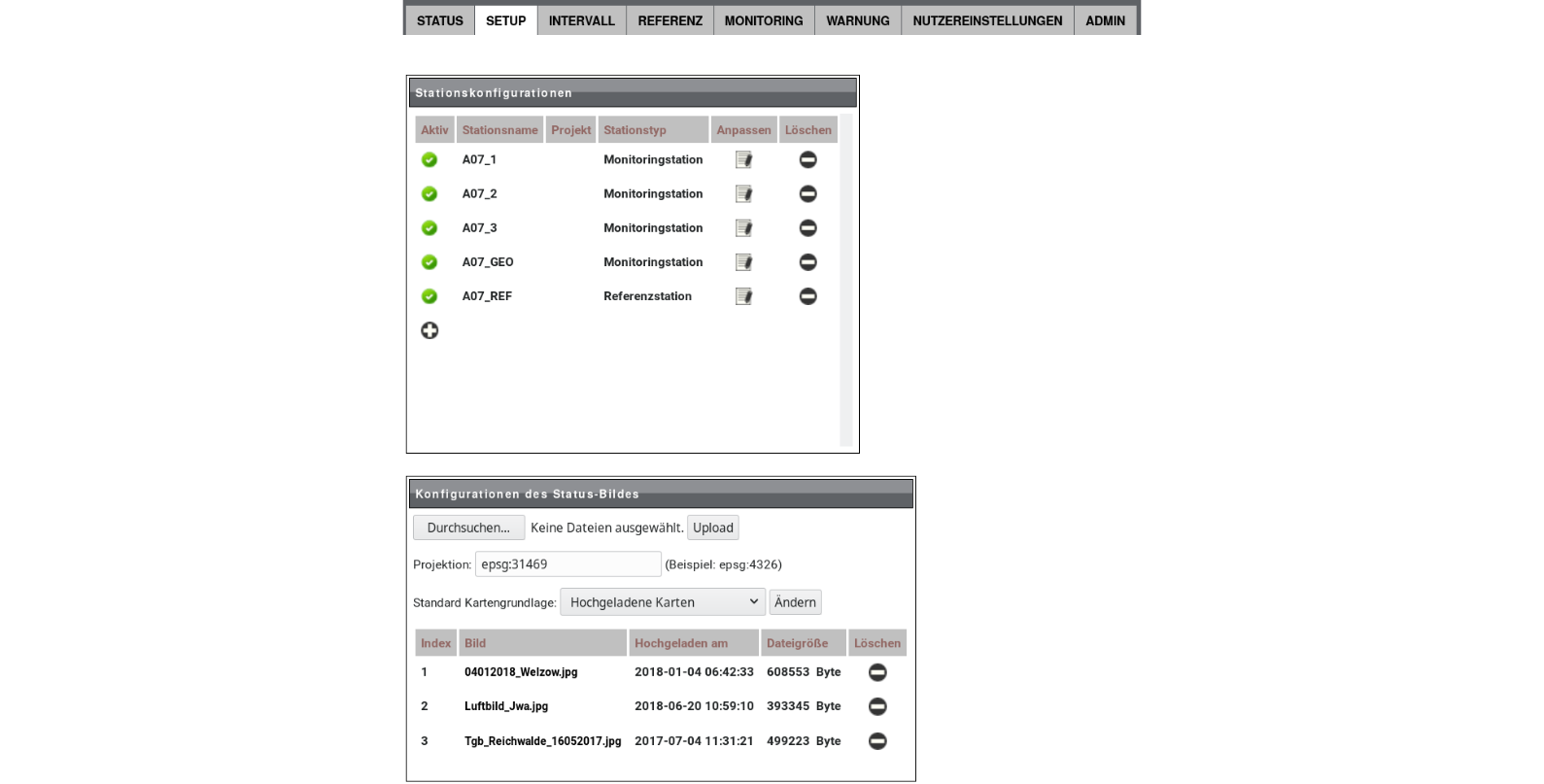
- Central data storage by the use of the Alberding data management software
Data evaluation and results

- Integration of RTK sensors
- Increase ot the RTK accuracy by averaging
- Data evaluation using "near-realtime" procedures by baseline processing
- Storing of coordinate differences together with sensor data
Presentation and handling

- Convenient accessibility via web interface, usable with any browser
- Visualization / configuration via HTTP interface
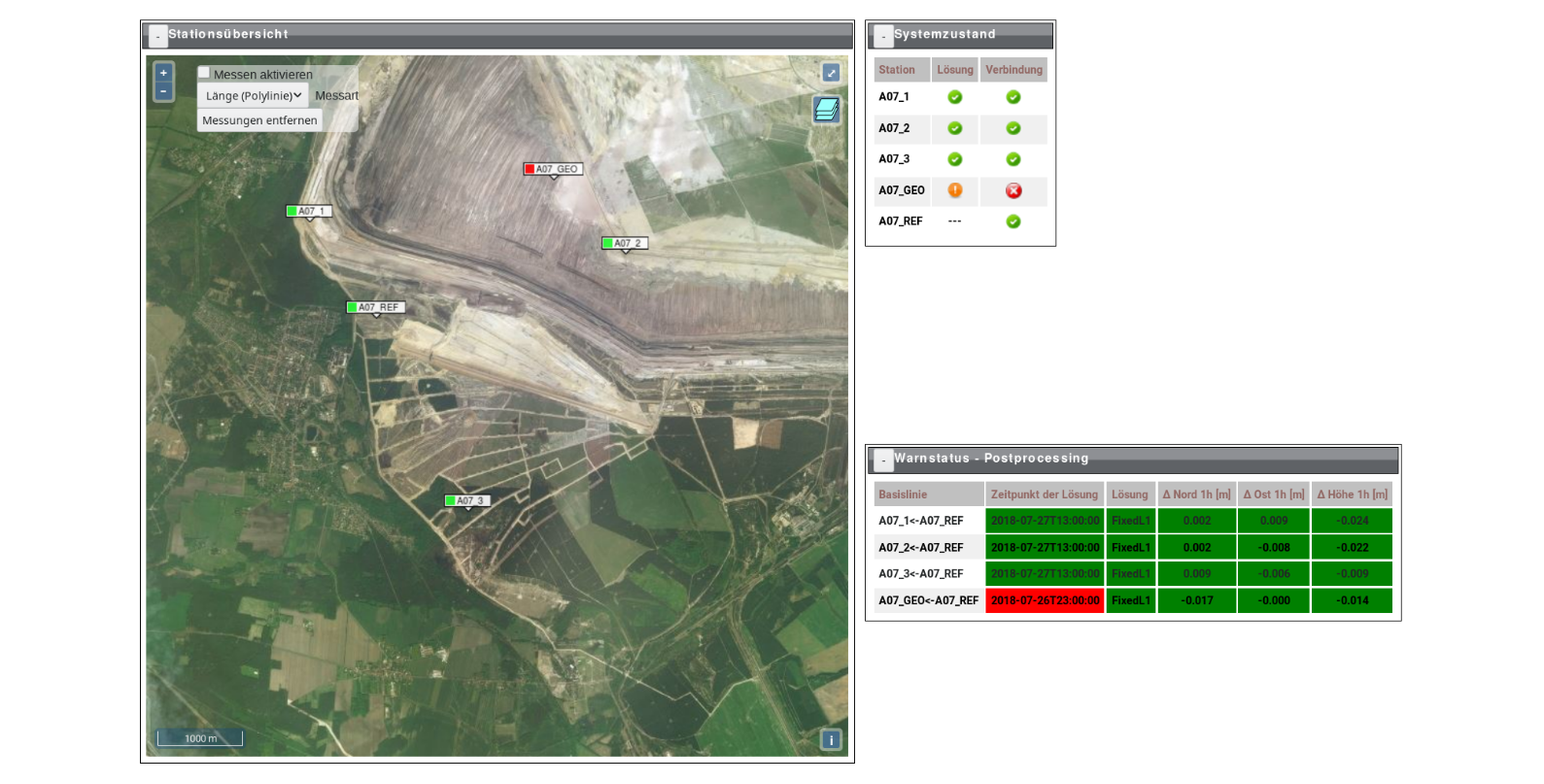
- Visualization of station positions and status on an interactive map
- Integration of a local map server for the use of own orthophotos as map base layers
- Export function for easy retrieval of CSV or PDF files
- Receipient individual warning settings
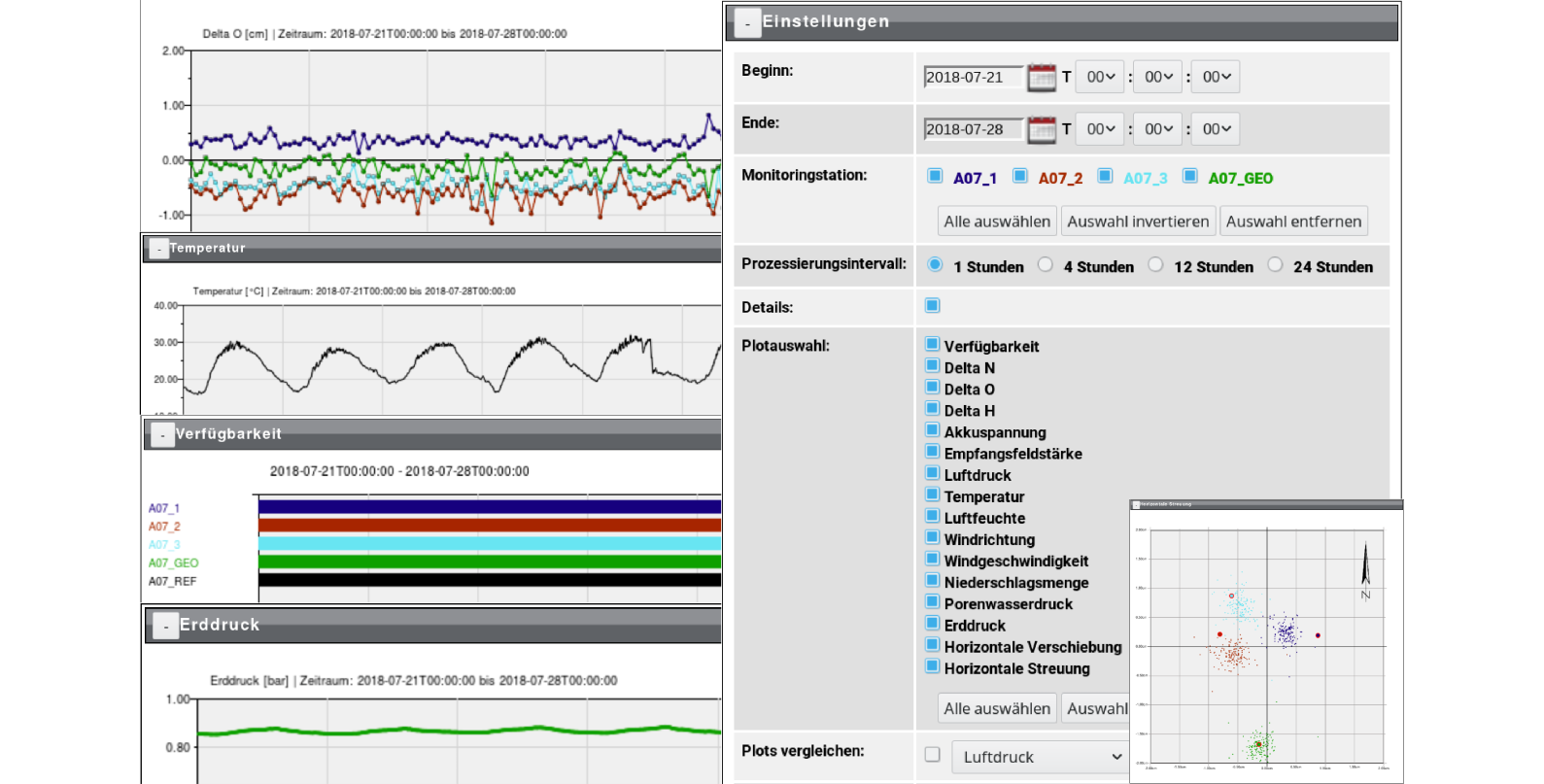
- Use of various types of charts such as: time series charts, vector charts and scatter charts
- Flexible selection of chart contents, chart types and scale ranges
Automation

- Automate reconnection after connection loss
- Catch up of file transfer if there had been no mobile data connection
- Continuous data flow from the sensor to the evaluated chart
- Automatic RINEX creation and baseline processing
- Warning and all-clear 24 hours / 7 days the week
Status information and alerting

- Colored display of sensor states in tabular form and on a map
- Individual configuration of thresholds and time spans
- SMS and/or e-mail notifications for any number of recipients
Operation and maintenance

- Runs on all LINUX distributions
- Convenient installation via the Alberding software repository
- Host service of Alberding GmbH possible.
Installation, server operation and maintenance of the monitoring systems are done by the Alberding GmbH.
Usage fee for the overall system.
Sensors
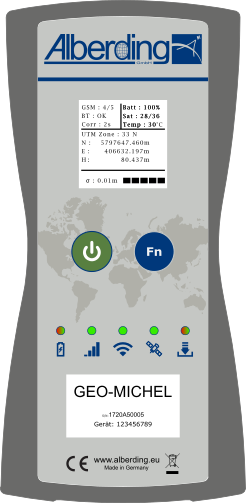
- Self-developed GNSS receivers for geo-monitoring (perfectly tuned to AMoS)
- Stand-alone mode of operation and interface for logging additional sensor data
- Support of binary raw data formats of nearly all major GNSS hardware manufacturers
- Support of standardized data formats like NMEA, RTCM and RINEX
- Flexible combination of different hardware manufacturers
- Potential integration of new data formats